
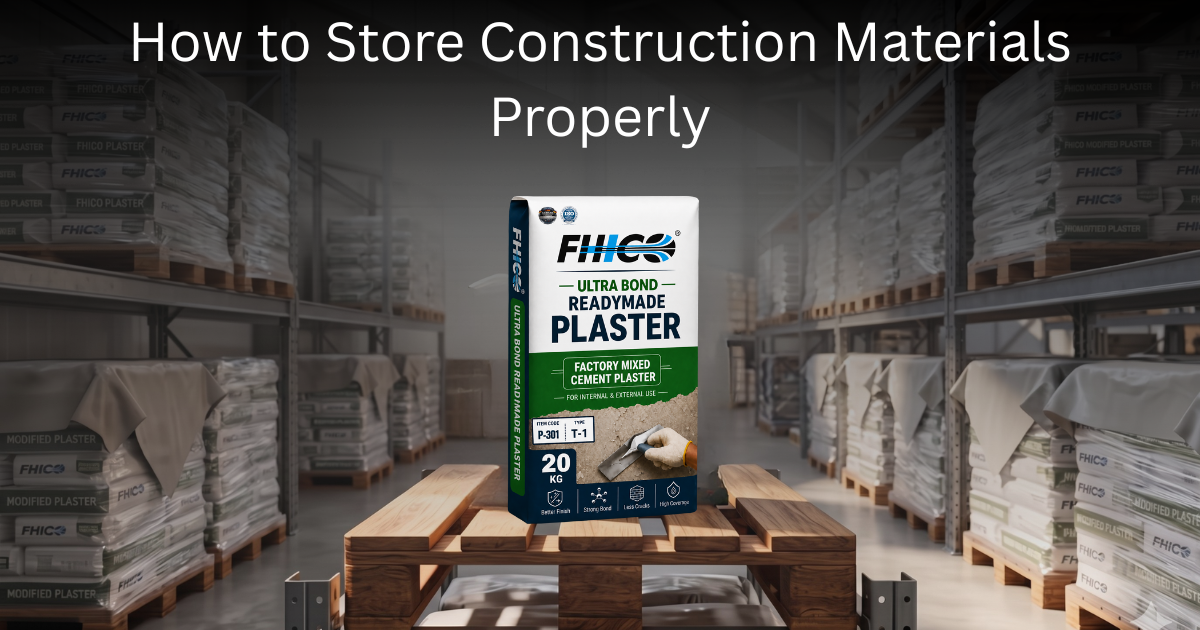
How to Store Construction Materials Properly | FHICO
Proper storage of construction materials is essential for maintaining product quality, reducing wastage, and supporting consistent construction performance. Exposure to moisture, rain, and unsuitable storage conditions can damage cement-based materials and ready-mix plaster before application.
Following the right storage practices helps contractors, builders, and applicators protect materials and manage construction sites more efficiently.
Why Is Proper Storage of Construction Materials Important?
Correct storage helps preserve the intended quality of building materials and reduces avoidable damage. Key benefits include:
- Maintains product quality: Protects materials from moisture and environmental exposure.
- Reduces wastage: Prevents damage caused by damp floors, rain, and compromised packaging.
- Supports consistent performance: Helps protect materials before mixing and application.
- Improves site management: Makes inventory easier to organize and inspect.
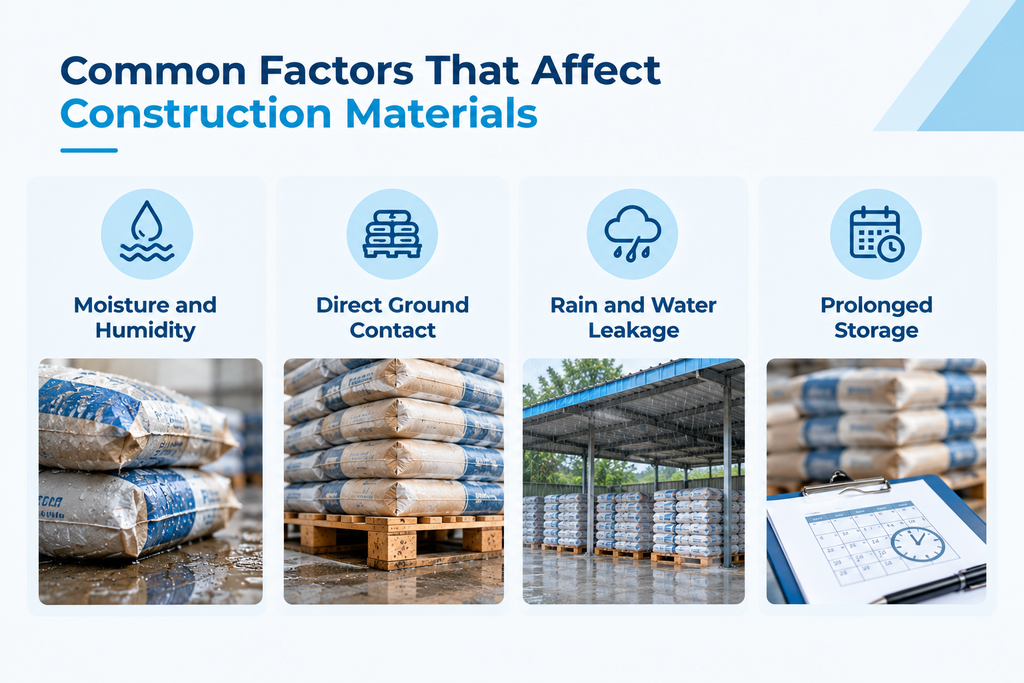
Common Factors That Affect Construction Materials
1. Moisture and Humidity
Moisture can cause cement-based materials to harden prematurely or form lumps. Keep products dry and follow the manufacturer’s storage instructions.
2. Direct Ground Contact
Damp floors can transfer moisture to material bags. Store bagged products on suitable raised platforms or pallets.
3. Rain and Water Leakage
Keep materials in a covered storage area protected from rain, standing water, and leaks.
4. Prolonged Storage
Check manufacturing details, batch numbers, and shelf-life information before use. Storage requirements vary by product.
Best Practices for Storing FHICO Construction Materials
Follow these essential precautions to help preserve material quality:
- Store products in a dry, covered, and well-organized area.
- Keep bags sealed and away from damp floors and standing water.
- Protect materials from rain and water leakage.
- Reseal opened bags promptly where permitted by product instructions.
- Inspect packaging for tears, damp patches, or hardened contents.
- Organize stock by batch and receipt date, and follow the recommended shelf life.
- Refer to the relevant FHICO product packaging and technical documentation for specific storage requirements.
Important: Do not use wet, hardened, or visibly deteriorated material without an appropriate technical assessment.
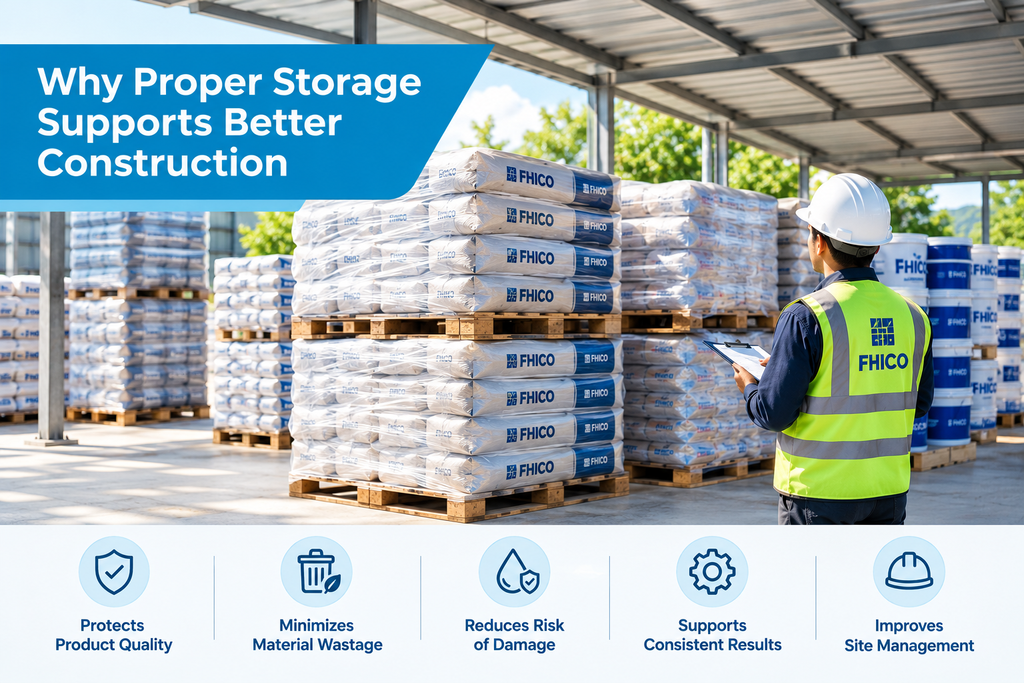
Why Proper Storage Supports Better Construction
Good construction practices begin before materials are mixed or applied. Proper storage helps minimize material wastage, protect product quality, and reduce the risk of using materials damaged by moisture or improper handling.
Combining suitable storage conditions with correct mixing, preparation, and application practices helps construction professionals achieve more consistent results.
How should FHICO construction materials be stored?
Keep products sealed, dry, covered, and protected from moisture. Store bagged materials on suitable raised platforms and follow the product-specific instructions.
Can a wet or damaged bag of construction material be used?
Moisture may compromise the material. Avoid using wet, hardened, or visibly damaged products without a suitable technical assessment.
What is the shelf life of FHICO construction materials?
Shelf life varies by product and storage conditions. Check the product packaging or current FHICO technical documentation.
Why should materials be stored on raised platforms?
Raised platforms help protect bags from damp floors and reduce the risk of moisture transfer.